
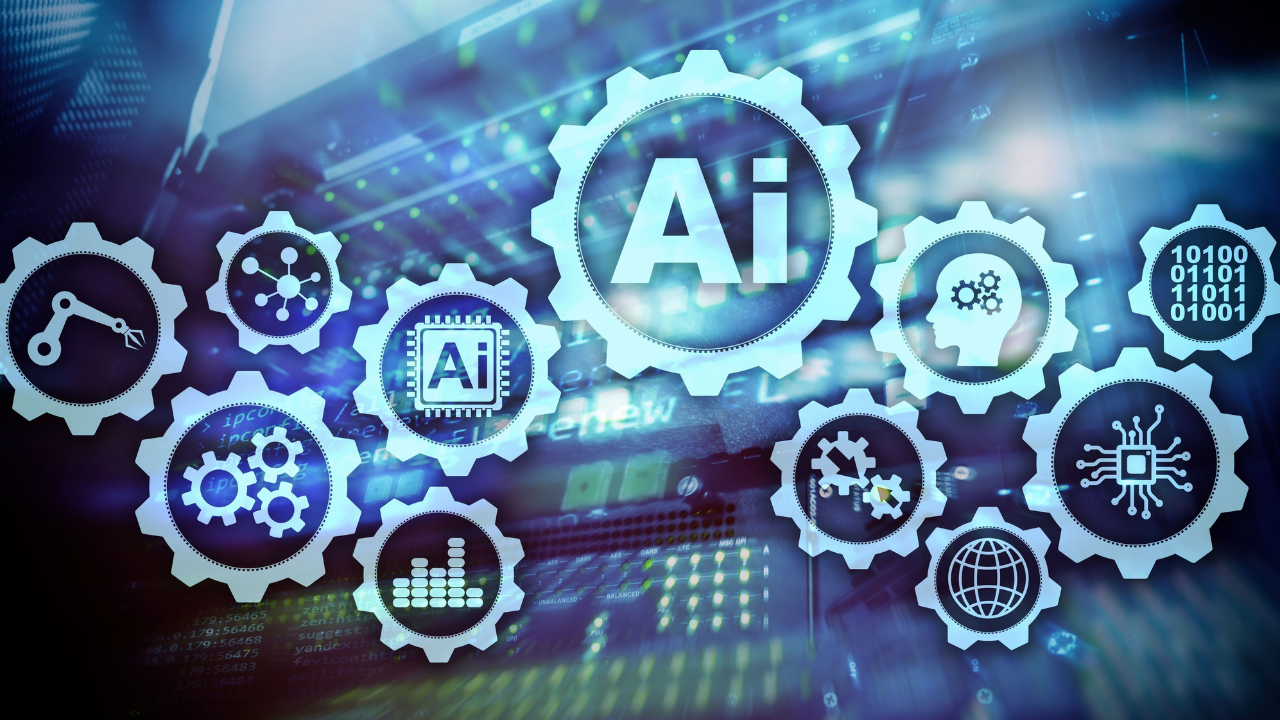
The software development landscape is undergoing major transformations. Technologies once considered futuristic are now deeply integrated into everyday developer workflows. The era of merely observing innovation has ended — we’ve taken a “one small step” leap into Agentic AI, where intelligent agents can operate autonomously, understand context, and handle even the most complex, end-to-end development tasks.
Thus, Agentic AI is far more than just a tool that executes instructions. Instead, it acts like a collaborative team member, contributing to everything from initial coding to final deployment.
This article explores how Agentic AI influences every phase of the development lifecycle, why businesses are embracing custom solutions built with these intelligent capabilities, and the opportunities and challenges they present.
What Is Agentic AI?
Agentic AI represents the next evolution of artificial intelligence — going beyond mere automation. While traditional AI depends on explicit input-output commands, agentic systems operate independently within a defined environment.
Such AI can perform far more than generating code snippets:
Comprehend the project’s architecture
Select the most suitable frameworks based on security and performance
Write unit tests for newly created code
Debug and optimize existing code
Recommend deployment strategies
When an agent acts on behalf of a user instead of merely assisting, it marks a profound shift in the software development workflow.
The Evolution of Software Development
Traditionally, software development has been defined by human-intensive tasks like coding, debugging, testing, and deployment. But as digital transformation accelerates, businesses now demand:
Faster project delivery
Highly reliable systems
Scalable, flexible architectures
Custom software development companies typically create tailored solutions for specific business needs. However, bespoke projects often face challenges — high costs, long development cycles, and future maintenance concerns. Agentic AI, by taking over repetitive or error-prone processes, allows developers to focus more on creating innovative features instead of automatable workflows.
How Agentic AI Enhances Every Stage of Development
1. Requirement Analysis
Before any code is written, developers must gather and interpret requirements. Agentic AI accelerates this step by:
Analyzing business documentation to draft technical specifications
Identifying conflicts or gaps in requirements
Suggesting system architectures based on best practices
By removing ambiguity early, the development process becomes more seamless.
2. Coding Assistance
This is one of the most visible applications of Agentic AI today. Beyond generating code, AI agents can:
Propose optimal algorithms for specific problems
Auto-generate boilerplate code
Ensure adherence to coding standards and style guidelines
Recommend languages or frameworks aligned with project goals
The goal is to ensure the final product is not just functional but also efficient and maintainable.
3. Debugging and Quality Assurance
Bugs are inevitable, and debugging can consume nearly half of a project’s timeline. Agentic AI tools can:
Detect potential bugs in near real-time during coding
Suggest fixes by analyzing past error patterns
Run automated tests without human input
Predict potential failures before they occur in production
This proactive approach significantly reduces the risk of deploying unstable applications and boosts reliability.
4. Testing and Validation
Agentic AI excels in automated testing by:
Generating unit, integration, and functional tests independently
Running large-scale test cases far faster than humans
Identifying edge cases that human testers might miss
Providing continuous code improvement feedback
This accelerates QA cycles — essential in an era of rapid software updates.
5. Deployment and Maintenance
Deployment pipelines often present significant challenges. Agentic AI streamlines this stage by:
Selecting the most suitable deployment environment (cloud, on-premises, or hybrid)
Automating containerization with Docker or Kubernetes
Monitoring performance metrics after deployment
Scaling resources automatically based on user activity
During maintenance, the AI can analyze logs, identify bottlenecks, and even recommend upgrades — saving IT teams significant time.
Benefits of Using Agentic AI
Faster Timelines: Automates repetitive coding and testing tasks.
Scalability: Delivers flexible solutions for projects of any size.
Fewer Errors: Detects and resolves issues earlier.
Better Customization: Builds software tailored precisely to business needs.
Knowledge Retention: Learns from past projects to improve future outcomes.
Impact on Custom Software Development
Custom solutions are essential when off-the-shelf software fails to meet specific business needs. By delivering tailored systems — from healthcare to e-commerce — they boost efficiency and competitiveness. Agentic AI strengthens this advantage through:
Rapid Prototyping: Quickly producing functional prototypes to validate ideas before full-scale development.
Adaptive Features: Continuously evolving workflows based on real-world usage.
Shorter Development Cycles: Reducing the gap between ideation and execution — crucial for first-mover advantage.
Smarter Maintenance: Ensuring sustainability and uptime through intelligent system monitoring.
With Agentic AI, businesses can achieve long-term cost savings and operational efficiency by reducing the manual labor traditionally required for custom software development.
Challenges and Risks
Despite its promise, Agentic AI faces several challenges before it becomes fully mainstream:
Data Dependency: Requires vast amounts of high-quality data, which may not always be available.
Trust and Reliability: AI outputs must be verified before deployment.
Ethical Concerns: Full autonomy introduces issues of accountability.
Skill Gaps: Developers must adapt to working alongside AI.
Security Risks: Automated code generation and deployment may introduce vulnerabilities if not properly monitored.
Therefore, human oversight remains essential — AI should never be the final authority without human validation.
The Future of Agentic AI in Software Development
The near future of software engineering will look very different. We can expect:
Development environments where AI handles complete modules autonomously.
AI-driven project management that identifies bottlenecks and reallocates resources dynamically.
End-to-end deployment pipelines triggered by humans but executed by AI.
A deeper collaboration between human creativity and machine precision.
Agentic AI won’t replace developers; it will amplify their capabilities, enabling teams to build custom software faster and with greater quality.
Conclusion
No longer just a buzzword, Agentic AI is rapidly becoming a cornerstone of modern software development. By supporting coding, debugging, deployment, and maintenance, it frees developers to focus on innovation rather than repetitive tasks.
For organizations building custom software, Agentic AI brings scale, efficiency, and reliability — three crucial pillars of success in the digital era.
While trust, security, and skill shortages remain hurdles, the future is clear: Agentic AI will continue to transform how software is created, tested, and deployed.











Write a comment ...